
Packing for Safari
Packing for safari is both exciting and sometimes a little daunting.
Going on a safari generally combines early morning drives, bumpy and dusty roads, and nightime conversations around an open fireplace under the stars – so one needs to cover a range of temperatures and experiences.
Clothing
Keep your clothing comfortable. Clothing should be practical rather than smart. Neutral tones such as khaki, olive, beige, brown and tan help ”blend” into the bush environment, as well as reducing attention from insects. Avoid bright colours, camoflage clothing and too much white as these stand out, especially on safari walks.
Temperatures vary widely. Mornings and evenings can be very cold (even in autumn and spring), while midday can be very warm to hot. Layering is the best option. Mix t-shirts, long-sleeved shirts/tops and fleeces or jackets for the early morning or late afternoon activities. Choose light, breathable fabrics for the bottoms (avoid jeans as they’re harder to dry), or shorts for the hotter weather (convertible safari pants that zip into shorts are very practical). Short or tight skirts and dresses aren’t practical as it makes it difficult to get on and off the safari vehicles. Regular clothing can be worn in and around the camps/lodges.
Footwear & Accessories
Closed shoes are recommended. Trainers or walking shoes are perfect for vehicle drives and bush walk activities. For any lengthy walking safaris or hikes, decent hiking shoes are advisable. Around the camp, sandals or flip-flops are fine.
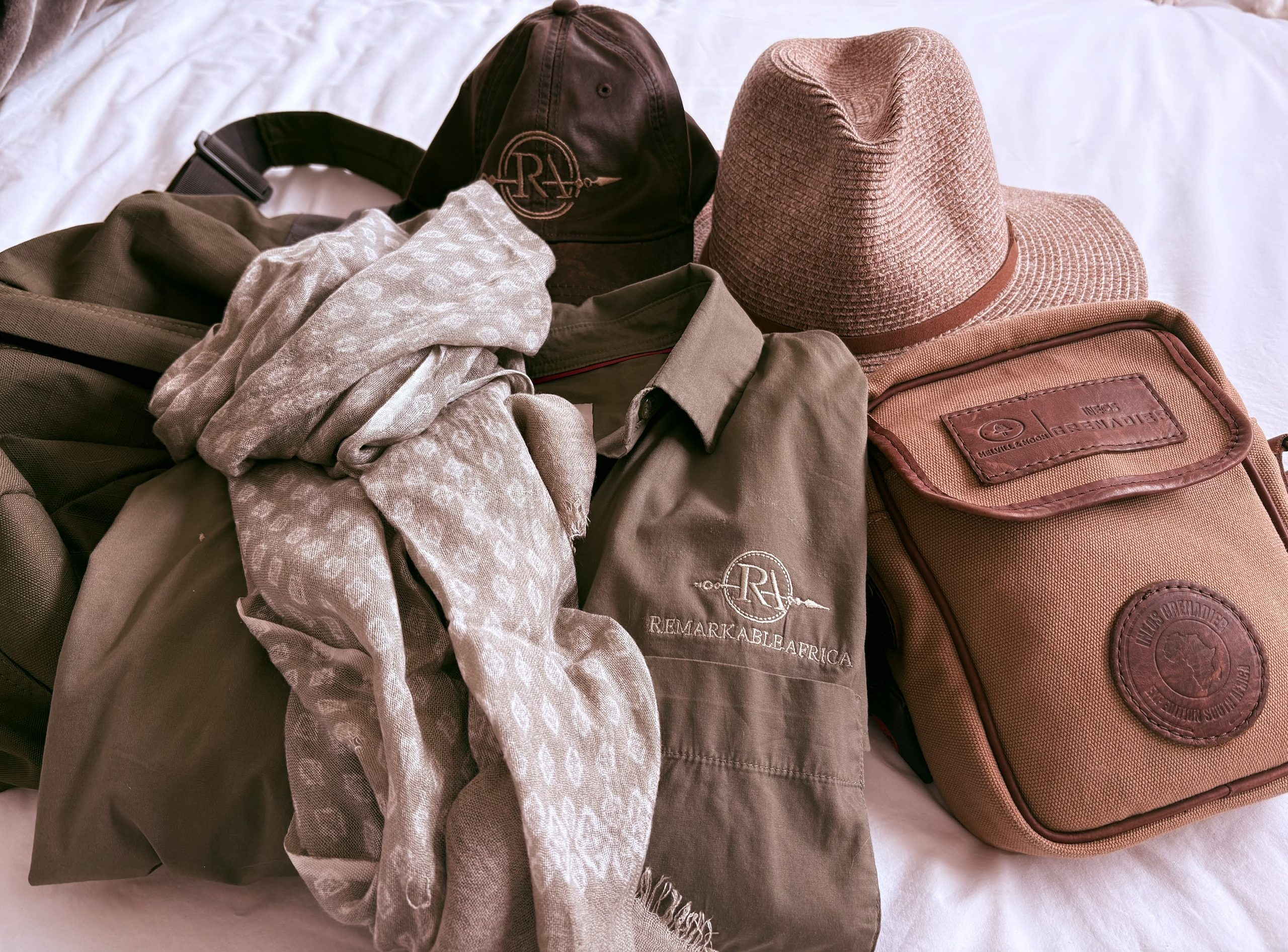
A wide brimmed hat and/or peak cap is recommended for sun protection. A lightweight scarf or buff is a very useful thing to travel with – a scarf can be used for sun, dust or warmth protection. A good sunscreen and sunglasses are also recommended.
A backpack or shopper style bag is a great addition – something to put a jacket, camera and binoculars into when going on activities. Water bottles are generally supplied at most of the camps and lodges to avoid single use plastics, however travelling with your own bottle (empty for airport days) can be helpful.
Other items that are helpful are lipbalm, hand sanitiser/wipes, a spare pair of glasses (if essential for vision), throat lozengers/sucking sweets and eye drops.
Other
Keep valuable paperwork – passport, visas/permits, travel insurance details, and vaccination certificates in a folder or sleeve that stays with you. Split cash between travellers and don’t put cash in your checked luggage.
If you take medication, please travel with this in your hand luggage. Should your bags get lost or delayed, getting replacement medication can be very difficult.
Cameras & Binoculars
Photography is one of the biggest joys of African safaris for some, so plan your tech gear carefully. A good zoom lens will help capture animals from a safe distance. Bring extra memory cards and fully charged spare batteries because you may not find charging points during long drives.
Binoculars make a HUGE difference, especially for spotting birds or animals, even when you’re close. Having a pair per person is also hugely beneficial – there is nothing worse than waiting for someone to finish with binoculars at a sighting and missing out.
South Africa uses Type C and M plugs with 220-240 volts, so pack the right adaptor. A power bank or multi-USB charger will also come in handy.
Luggage
Soft-sided duffel style bags work best because many transfers and light aircraft have strict weight limits and size limits.
For further information, contact us


